Speed limits for motorhomes and caravans in the UK are not always obvious. The national limits depend on what type of vehicle you are driving, whether you are towing, and what kind of road you are on. Get it wrong and you could face a fine or points on your licence.
This guide gives you the general picture. Always check the current rules on GOV.UK and the Highway Code before you travel, as rules and signs can change.
The basics
Speed limits in the UK are set for the type of road, but some vehicles and combinations have their own lower limits. In broad terms, you should keep an eye out for:
- Motorways and dual carriageways
- Single carriageways
- Built-up areas, where the signed limit applies
- Any signed restriction, which always takes priority
Motorhomes without a trailer
As a general rule, a motorhome with a maximum authorised mass of up to 3.5 tonnes follows the same national speed limits as a car. That usually means 70mph on motorways and dual carriageways where signed, and 60mph on single carriageways, unless signs show otherwise.
Larger motorhomes can have different limits. Heavier vehicles, depending on their weight, often have a lower motorway limit. Check your vehicle's weight in the paperwork and confirm the rules for your category before you drive.
Towing a caravan
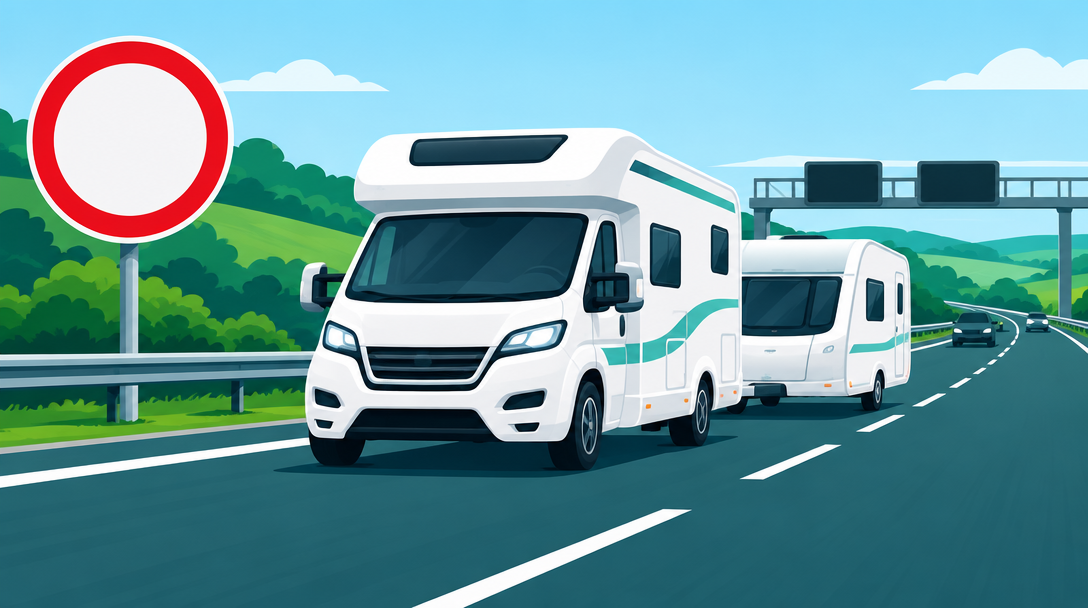
Towing usually brings lower limits. In general:
- Motorways: 60mph
- Dual carriageways: 60mph
- Single carriageways: 50mph
These limits apply to many car and caravan combinations, but check the rules that apply to your vehicle and trailer. Some combinations and vehicle types have different requirements. The Highway Code is the place to confirm the details.
Towing with a motorhome or campervan
Towing a trailer behind a motorhome has its own rules, and they can differ from towing with a car. Check the vehicle's category and the trailer's details before you set off.
Why lower limits make sense
Lower limits are not there to slow you down for the sake of it. A caravan changes how the whole combination handles. It needs more space to stop, and it can be affected by wind, passing lorries and uneven road surfaces. Driving at a steady, sensible speed helps you stay in control.
Practical tips:
- Keep a bit of extra distance from the vehicle in front.
- Leave more room when you overtake.
- Use the left lane when it is safe and legal to do so.
- Slow down in strong wind or heavy rain.
- Check your mirrors often, especially on long descents.
Check before you go
Before any trip, look up the national limits that apply to your vehicle and combination. Check your route for any signed restrictions. Your sat nav can help you plan, but signs on the road always take priority.
Also check your insurance and licence entitlement. Speed limits are only one part of driving legally with a motorhome or caravan.
Final thoughts
Know your vehicle's category, know your towing limits and drive to the conditions. Stick to the rules, stay relaxed and you will arrive at the campsite in one piece, ready for a brew.
For anything specific to your vehicle or licence, check the official guidance on GOV.UK and the Highway Code, or speak to your vehicle manufacturer.