Taking Your Motorhome to the Isle of Wight: Ferry Sizes, Bookings and Arrival Routes
Touring the Isle of Wight in your own outfit is one of the most rewarding trips in southern England - but the crossing is where most motorhome owners pause. Which ferry takes a motorhome? Will your height clear the car deck? How much will a 7-metre vehicle cost, and where do you actually go once you roll off?
The good news is that every cross-Solent route accepts motorhomes, caravans and campervans. The trick is matching your vehicle's real dimensions to the right crossing, booking early, and knowing your arrival route before you leave the mainland. Here is exactly how to plan a motorhome ferry to the Isle of Wight.
Which Crossings Take Motorhomes and Caravans?
There are three main vehicle ferry routes to the island, and all of them carry larger outfits.
Portsmouth to Fishbourne
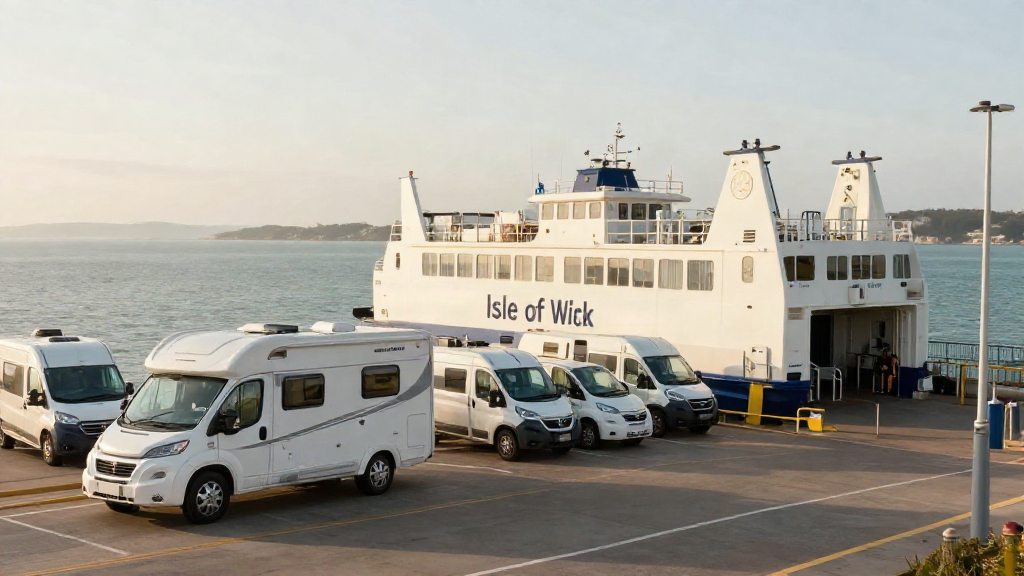
The busiest route and the most motorhome-friendly. Wightlink runs this crossing in around 45 minutes, landing you at Fishbourne - a short hop from Ryde, Newport and the east coast campsites. Crossings are frequent, so it suits flexible arrival times.
Southampton to East Cowes
Red Funnel's Southampton service is another strong option, taking roughly an hour to East Cowes. It is handy if you are travelling down from the Midlands or the north, and it puts you right beside Osborne House and the north coast.
Lymington to Yarmouth
Wightlink's Lymington crossing is the shortest at around 40 minutes and lands at Yarmouth in the west of the island. If your campsite is near Freshwater, Colwell Bay or the Needles, this is the smoothest arrival of the lot.
A fourth seasonal service - the passenger-only catamarans from Portsmouth and Southampton - cannot carry vehicles, so ignore those when planning a motorhome trip.
Vehicle Length, Height and Price: What Shapes Your Booking
Every operator prices on the space your vehicle occupies, not just the fact that it is a motorhome. When you book, expect to enter:
- Overall length, including any bike rack or tow bar
- Height, measured to the highest fixed point - roof box, aerial or vents included
- Width, especially if you run wide mirrors or a slide-out
Motorhomes are typically charged in length bands. A compact campervan under 5 metres sits in a lower band than a 7.5-metre coachbuilt, and anything over 8 metres or a towing caravan plus car is usually classed as a large vehicle with its own tariff. That is why the same crossing can cost noticeably more for a big A-class than for a small van.
Two practical points save money and stress:
- Measure properly before you book. Check height with a tape against a wall or use your sat nav's stored profile. Guessing high costs a little; guessing low can mean being turned away at the port.
- Book ahead for school holidays and summer weekends. Cross-Solent ferries sell out of large-vehicle spaces first. Booking weeks in advance also unlocks the cheaper saver fares.
Most operators ask you to arrive 30-60 minutes before departure and park in the lanes for larger vehicles. You will normally be loaded after cars, so stay with your vehicle until staff direct you.
Arrival Routes Once You Roll Off
The 15 minutes after you disembark matter as much as the crossing - especially in a vehicle that does not fit every lane.
From Fishbourne
Exit onto the A3054 towards Newport for the centre, or turn towards Ryde for the east coast. The roads here are the island's busiest, so give yourself room and follow the main routes rather than cutting through villages.
From East Cowes
The A3021 takes you towards Newport and then out to the south coast resorts. Avoid threading a large outfit through the narrow lanes around Cowes itself.
From Yarmouth
The A3054 heads east along the north coast, or take the B-roads south towards Freshwater. This corner of the island has some of the tightest lanes in the UK - hedgerows, single-track passing places and low branches - so a vehicle-aware route is worth its weight in gold here.
Whatever port you use, the island's quietest roads are not built for a 7-metre motorhome or a caravan on tow. This is exactly where a sat nav that knows your height, width and weight earns its keep: it steers you away from low bridges, weight limits and lanes you would rather not meet head-on.
Finding a Campsite That Takes Your Outfit
Once you know your crossing, match it to a pitch. The Isle of Wight has a strong spread of touring sites, but they vary in what they can accept:
- Pitch size - a large motorhome or caravan plus awning needs a generous hardstanding or super pitch
- Access - some rural sites sit at the end of narrow approach lanes
- Hook-up and services - check amperage and whether you need your own cable length
Filter for sites that match your vehicle length before you book, and keep the site's arrival route in mind when you choose your ferry port. Landing at Yarmouth makes far more sense for a west-island site than crossing to Fishbourne and driving the whole way across.
Plan the Crossing, Then Let Your Sat Nav Handle the Rest
A motorhome ferry to the Isle of Wight is genuinely straightforward once you know your dimensions, pick the right crossing and treat the island's lanes with respect. Measure your vehicle, book early for the busy weeks, and choose the port that sits closest to your pitch.
Then enter your vehicle's dimensions into a sat nav built for UK touring, and let it handle the low bridges, narrow approaches and site routes for you. With 6,000+ UK campsites and vehicle-aware navigation in one app, you can arrive on the island feeling ready rather than relieved - and spend your energy on the views, not the lanes. Take the free trial and plan your next cross-Solent trip with confidence.